
”我回頭看這五千年的歷史,寫滿了吃人。“ ~~ 魯迅
“I look back at the 4,000 years of Chinese history, every page is filled with cannibalism.” ~~ Lu Xun, most influential Chinese writer of the 20th century.
The allusion to cannibalism in the works of Xu Lun is both literal and figurative.
Literal is the sense that it alludes to the significant amount of documented cases of cannibalism in China during war and famine.
But also figurative.
Figurative in the sense that the Chinese history, and the Chinese civilization to a large extent, though boasting of continuously existing for more than 4,000 years, has simply never progressed beyond the most basic animal cycle of life: the total and wholesale destruction of its organic beings, the most brutal killing and torture of its own species, followed by a period of relative calm, under the extreme suppression of the most tyrannical and dictatorial form of government, accompanied by geometric increase in population to the point of bursting, and then, finally, eruption of its own self-imposed cocoon of artificial peace, the re-ignition of internecine wars and mutual ethnic cleansing of the most horrific form.
Emmanuel Kant once wrote that anyone who has actually studied Chinese philosophy will go away deeply disappointed, in the utter vapidness and stupidity of its alleged deep wisdom that had often been shrouded in mystery and forbidden from the west. In some way this is true even to this day. The only people who admire Chinese culture have never actually experienced China first hand, and those few who did (much like Marco Polo and Edgar Snow: the predecessors of the gullible western men) only see the side of China that they were allowed to see, but ask any Japanese, any Korean, or any Vietnamese, and you will come to vastly different conclusions.
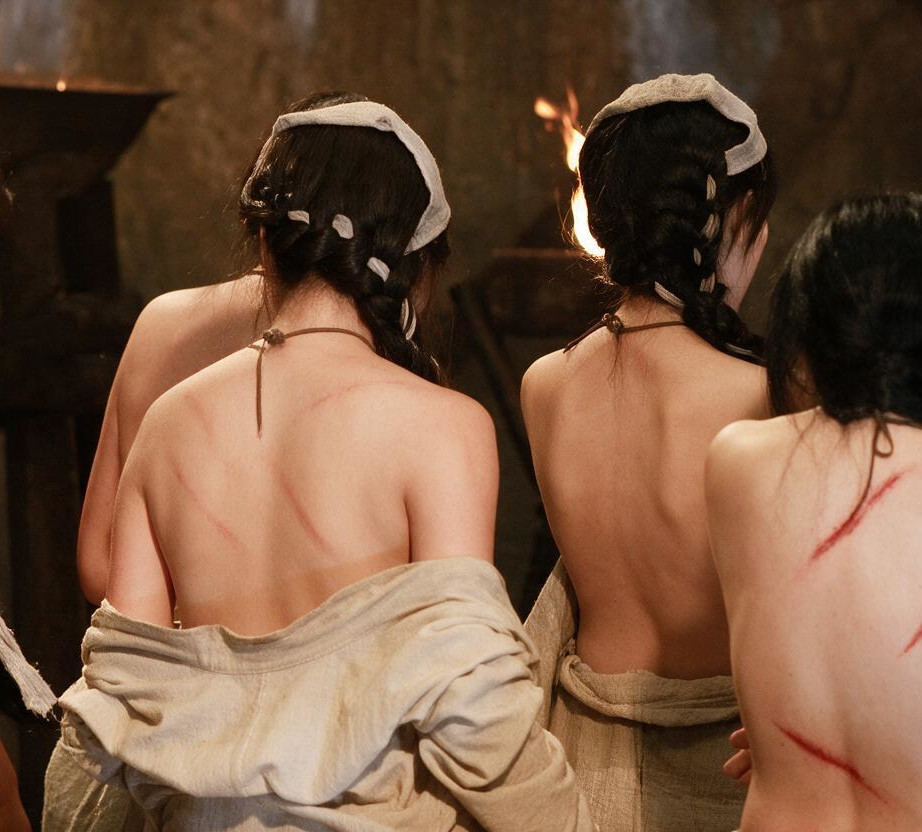
Cannibalism in Modern China. Case studies A
菜人哀 屈大均
夫婦年饑同餓死,不如妾向菜人市。
得錢三千資夫歸,一臠可以行一里。
芙蓉肌理烹生香,乳作餛飩人爭嘗。
兩肱先斷掛屠店,徐割股腴持作湯。
不令命絕要鮮肉,片片看入饑人腹。
男肉腥臊不可餐,女膚脂凝少汗粟。
三日肉盡餘一魂,求夫何處斜陽昏。
天生婦作菜人好,能使夫歸得終老。
生葬腸中飽幾人,卻幸烏鳶啄不早。
“The Lamentation of The Veggie Human” was a poem written by a Chinese scholar 屈大均 who lived in the interregnum period between Ming and Qing dynasty around 1600 AD. The poem documents one particular case of cannibalism as witnessed by the poet. The gist of the poem states as follows:
A Chinese man and his wife were on the verge of starvation. Instead of both of them starving to death together, the wife decided to enter the vegetable market and become a “veggie human” (菜人). Becoming a veggie human earns her 3,000 bronze coins (currency used in China during this period), which will then be used to assist her husband’s return to their home province. A small piece of her flesh (一臠) can help her husband walk one li (里: Chinese unit for measuring distance, roughly equals to 500 meters). The good parts of her flesh were cooked and broiled and the sweet smell of meat permeated through the air. The flesh on her breasts were sliced off and were made into fillings for dumplings, and people thronged around the shop fighting over each other to get a taste. Her two arms were chopped off and were hang from hooks in front of the shop; the flesh around her thighs and buttocks were carved off along her bones, piece by piece, and those flesh were used as ingredients in meaty soup. They did not kill her before she was dismembered, because customers wanted to make sure that the meat was fresh; also, it’s considered inauspicious to eat human flesh from corpses; so throughout the entire process, the woman was alive and witnessed her own flesh being sliced off and cooked in front of her. (不令命絕要鮮肉,片片看入饑人腹。) Men’s flesh are too fishy (腥臊) and when they are being sliced, they give out foul smelling odor of sweat, so a woman’s flesh is preferred. Her flesh was thus processed over the course of three days and nothing was left of her other than a set of skeletons and a mournful ghost. The mournful ghost went out to seek her husband by the slanted ray of sunset on the hill. It’s a good practice that woman becomes veggie human, so she can help her husband live a longer life. Another good thing is that whereas other people are buried underground and be fed to worms, I’m buried inside the intestines of many people who feasted upon me.


Wow. Such an interesting part of the culture. Thank you for educating me in it 🙏
This used to be a fun blog about AF submission. Now it has degenerated into incest and cannibalism. I thought you were married and serving your new husband, maybe not.
You need to serve him better if you are remarried. If not find a new master and serve him. For me, I am wondering where the older AFs are. I am in my 60s and could use an older one maybe 50+. I could find a spot on my floor for a doggie bed when I don’t want to use her and she can serve me otherwise.
Turn your attention to something useful such as that, providing AF slaves to WM. Do not worry yourself about things that are not your concern such as Kant, philosophy or “civilization.”